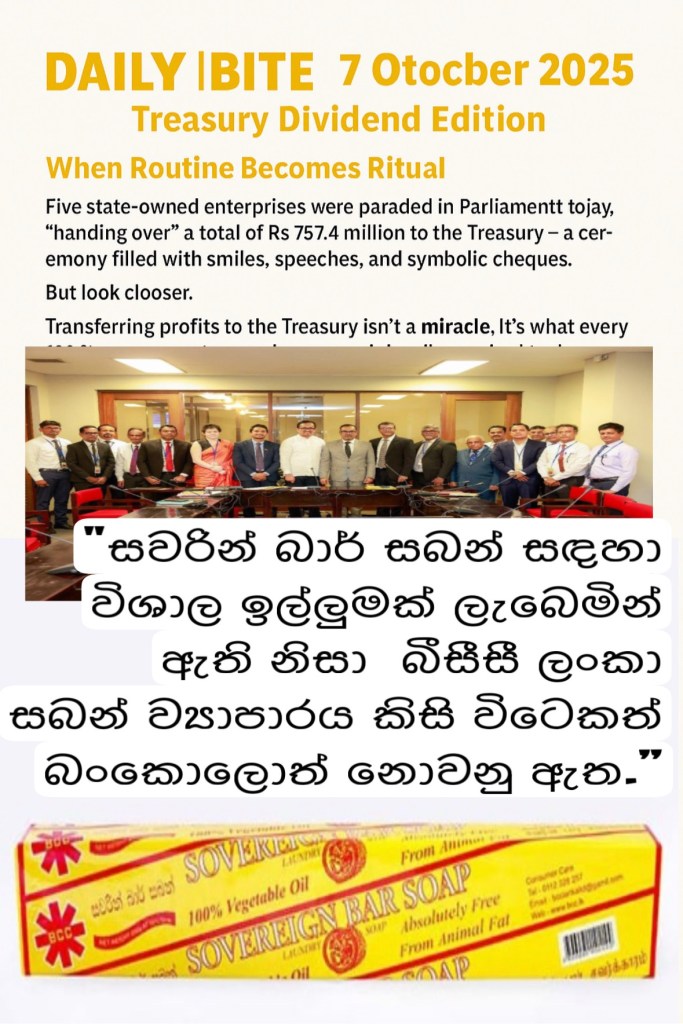
Today, five state enterprises “handed over” Rs. 757.4 million to the Treasury – a ceremony filled with smiles, speeches, and large ceremonial checks.
But think about it.
Transferring profits to the Treasury is not a surprise. That’s what every 100% government-owned company is legally required to do.
These companies – Lanka Mineral Sands, BCC Lanka, National Salt, Lanka Phosphate, and Kahatagaha Graphite – have sent dividends before. Some even reported losses just a year or two ago.
The Numbers Behind the Story
Lanka Phosphate Company posted an operating loss of Rs. 39.8 million (2022/23) before making a profit this year.
Lanka Mineral Sands once reported a loss of Rs. 51 million (2020).
BCC Lanka endured losses for years before recovering through asset revaluations.
Kahatagaha Graphite paid its first dividend after 14 years – a modest Rs. 7.4 million.
National Salt promises “a reasonable dividend soon.”
So the Rs. 757 million is not newly discovered money; it’s a mixture of regular transfers + promised funds, wrapped up as a public victory.
Presenting an image of economic revival through turning a routine accounting entry into a press conference.
Postscript:
The Laundry Cycle of Politics
If BCC Lanka, the famous Sovereign Bar soap manufacturer, maintains steady production, its future will truly flourish – because in today’s politics, washing has become a national pastime.
Yes, there’s huge demand for Sovereign Bar soap.
“As long as impurity keeps coming, the soap business will never go bankrupt.”
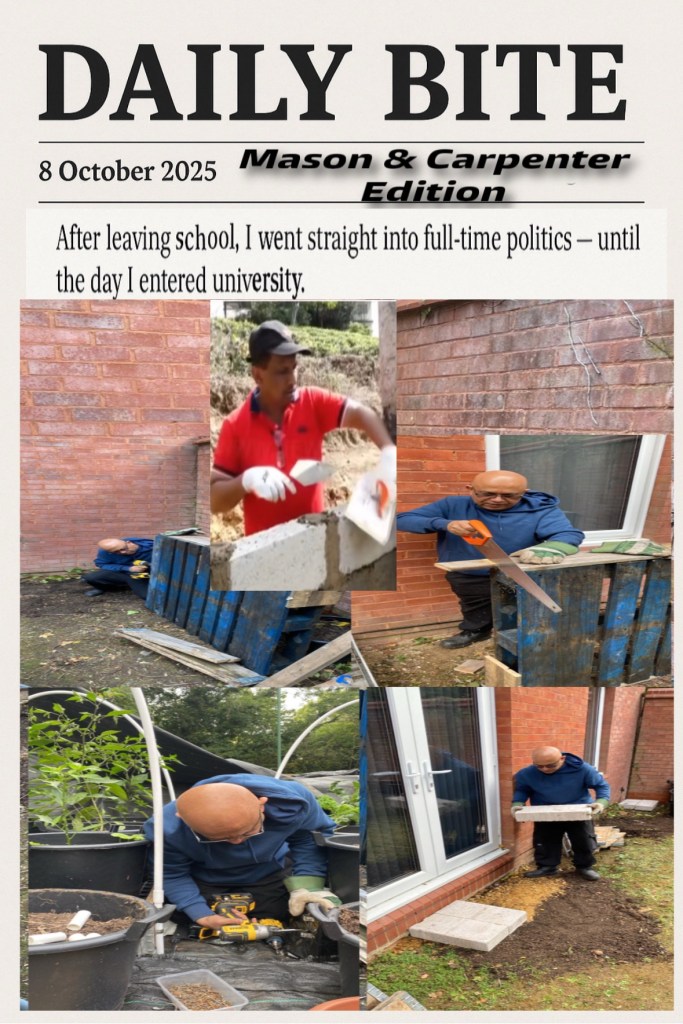
A monkey holds a clipboard. A man cuts down a teak tree. Another stacks timber. Someone else digs for gems — and there’s even a water tank in the back, for “eco-balance.”
Welcome to the latest version of Sri Lanka’s environmental restoration:
Removing “invasive species” to help wildlife sounds like a good idea — but even developed countries struggle with it.
In Sri Lanka, most forestry and wildlife projects run on the smallest possible operational budget.
Soon, somehow, the sound of chainsaws will echo louder than any conservation plan.
Millions have been spent on monkey censuses — but the result?
The real forests are quietly turning into timber markets and gem mines.
Here, every good idea eventually ends up as something profitable beneath the surface.








 මගේ සිතුවිලි